
Dehesa
The Extremadura dehesa
Extremadura
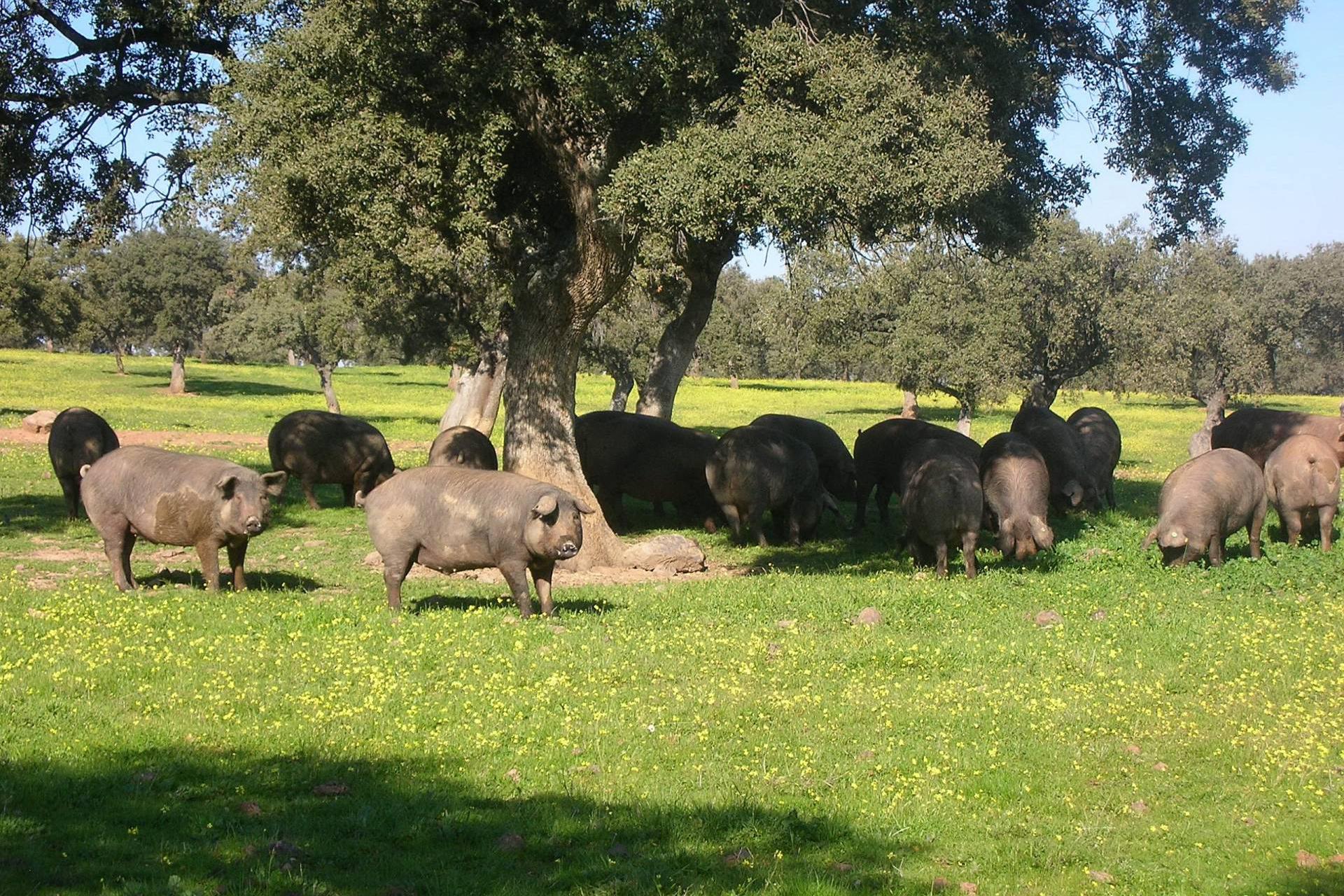
In Extremadura, holm oaks spread their branches above the pasture. Livestock roam among trees that provide shade in summer and food in autumn. This is the dehesa, a landscape shaped by generations of farmers that remains part of everyday rural life in Extremadura.
One of Spain’s defining landscapes
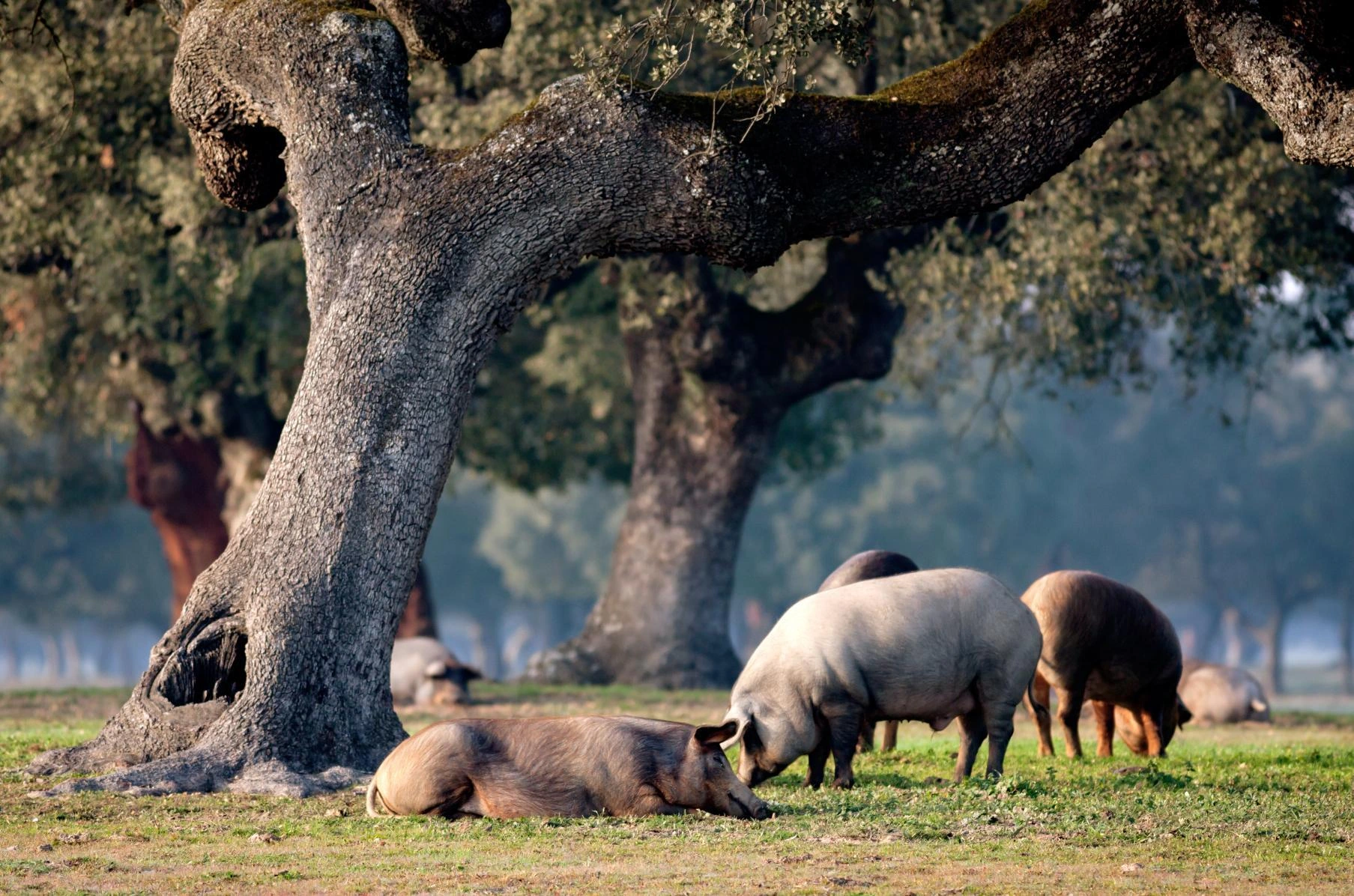
Extremadura has Spain’s largest area of dehesa. The regional Forest Plan estimates that wooded dehesa covers more than 1.3 million hectares, nearly two-thirds of Extremadura’s wooded land. Holm oak is the dominant tree, alongside cork oak stands and areas where both species grow.
Trees and pasture that sustain life
The grass beneath the trees differs from the grass growing in full sun. This variety extends the grazing season. Woodland, open areas, scrub and ponds provide food and shelter for many species. Extensive livestock farming can coexist with other activities, such as harvesting cork or producing honey. Maintaining that balance means matching grazing to available resources and allowing new trees to grow.
The montanera and acorn-fed Iberian pork
The montanera begins as acorns fall. During this final fattening period, pigs destined for the acorn-fed category roam the dehesa and feed on acorns, grass and other natural resources, without supplementary feed. The acorn crop varies each year and determines how many animals each farm can support. It connects this landscape to the acorn-fed category of Iberian ham, shoulder and loin.
Dehesa
Valdegamas
At Valdegamas, our farm in the Don Benito area, we raise some of the Iberian pigs used to make our products. Having our own farm lets us follow how the pigs are raised and know their origin first-hand. The catalogue lists the category for each product so you can choose what suits your range.
View catalogue